原文は文末からご確認ください。
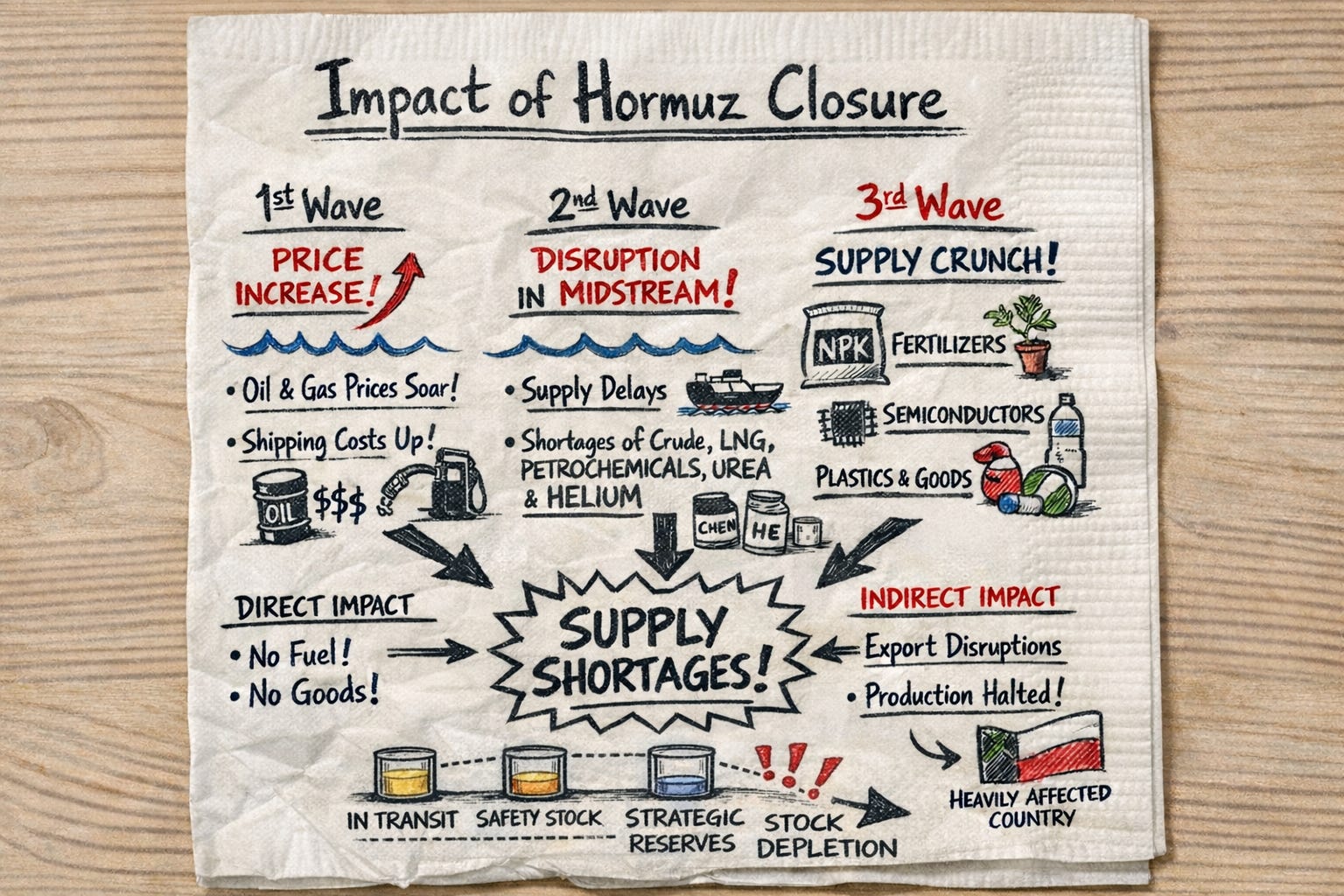
今、避けるべき過ちは、ホルムズ海峡の事実上の封鎖によって引き起こされた3つの混乱の波、すなわちオイルやガスの価格の高騰、中流での混乱による物流の遅延、そして肥料など物資の供給の不足が、順番に到来していると考えてしまうことだ。そうではない。それらは重なり合い、相互に影響し合い、異なる速度で世界システムを駆け巡っている。実際には、これは一部の国がすでに第3の波の影響を受けている一方で、他の国々は依然として第1の波による衝撃に対処しているに過ぎない。
これは産業全体にも当てはまる。一部のセクターでは、依然として価格高騰、輸送リスク、保険料の上昇への対応が主となっている。一方で、すでに物理的な品不足、投入資材の遅延、供給制約による操業上の影響に直面しているセクターもある。したがって、これら3つの波は単なるタイムラインではない。これらは、戦略的なショックが密接に結合したシステムを通じてどのように伝播するかを理解するための枠組みなのだ。
この区別が重要なのは、それが我々の目の前の状況をどう解釈するかに影響を与えるからである。もし明確な順序があると仮定すれば、状況の深刻さを過小評価してしまいがちだ。一見、市場は機能しているように見え、スーパーの棚は品揃えが充実しており、航空便も運航されているのを見て、システムは持ちこたえていると結論づけがちだ。しかし、それは往々にして誤った読みである。
複雑なシステムは、表面下で静かにダメージが蓄積している間も、一時的にストレスを吸収することができる。在庫を減らし、希少な生産能力に対してより高いコストを支払い、物流ルートを変更し、メンテナンスを先送りし、運転資金を逼迫させ、その他すべてよりも政治的または商業的に保護された需要を優先させることによって、システムは持ちこたえるのだ。外見上は、まだ管理可能な状態に見えるかもしれない。しかし構造的には、すでに悪化している可能性がある。
だからこそ、たとえまだ完全には見えていなくても、長期的なダメージはすでに生じている可能性が高いのだ。最初に目に見える影響は、通常、システムの最も流動性が高く透明性の高い部分、すなわちエネルギー価格、運賃、保険料、市場のボラティリティに現れる。
しかし、より深刻な影響は、その衝撃が精製、製造、食料システム、輸送スケジュール、家計予算にまで波及した後に現れる。その段階に至れば、問題はもはや単なるコストの問題ではない。
それは、資源配分、代替、そしてレジリエンス(回復力)の問題となる。誰が最初にアクセスできるか、誰がまだ購入する余裕があるか、そして経済のどの部分が中断なく稼働し続けられるか、という問題だ。
この海域を通過し、その周辺を移動するのは、石油やガスだけでなく、多くの国がそれぞれ異なる形で依存している原料、化学製品、金属、中間製品、そして産業用投入物でもある。
だからこそ、この混乱は単一の均一なショックとして現れるわけではない。影響は、輸入原材料への依存度、加工工程の依存関係、輸送ルート、在庫のバッファー、代替手段の有無などによって、セクターごとに不均一に及ぶ。一部の国にとっては、エネルギー安全保障や輸送コストへの即時の圧力となる。他の国にとっては、産業の継続性、投入資材の入手可能性、輸出競争力、あるいは輸入肥料、包装資材、燃料に依存する食料システムへの圧力となる。
化学、プラスチック、建設資材、製造業、食品加工、航空、物流といった産業はすべて影響を受ける可能性があるが、そのタイミングも程度も一律ではない。これこそが、このような混乱を「システミック(体系的)」なものにしている要因である。つまり、混乱は国やセクターごとに異なるレベルで波及するものの、その根底にある「供給不足、コスト上昇、そして対応の余地の縮小」という同じパターンを強固なものにするのである。
この事態の深刻さは、日常生活に顕在化して初めて認識されるだろう。食料や基本的な消費財の価格が著しく高騰する可能性がある。一部の市場では燃料が極めて不足し、配給制の導入も否定できなくなるかもしれない。
航空会社は路線を廃止したり、便数を減らしたり、需要を急激に減らすような価格設定を行ったりするかもしれない。タンカー運賃や海運データとして表れている間は遠く感じられる事態も、日常生活の営みに置き換われば、極めて現実的なものとなる。その時点で、物語の様相も一変する。地政学的あるいはサプライチェーン上の出来事として始まった事態が、生活水準の問題へと変貌するのだ。
被害の不平等な分布についても、明確に指摘しておく必要がある。最悪の影響が、最も豊かな経済圏で最初に、あるいは最も深刻に感じられることはまずないだろう。その打撃を最も強く受けるのは、アフリカやアジアの貧しい国々、とりわけ輸入依存度が高く、通貨が脆弱で、財政的余地が限られており、食料や燃料のインフレに極めて敏感な国々である可能性が高い。
こうした国々において、この種の外部ショックは単なる不便や成長の阻害要因にとどまらない。食料安全保障、社会の安定、国家の統治能力に対する直接的なストレス要因となり得る。エネルギーや輸送コストのわずかな上昇でさえ、購買力の低下、公共サービスの混乱、政治的緊張へと連鎖する可能性がある。そこにおいて、サプライチェーンの脆弱性は、より広範なレジリエンス(回復力)の問題となる。
西側諸国にとっての最悪のシナリオは性質が異なるものの、それでも深刻である。それは即時の崩壊というよりは、漸進的な浸食に関する問題だ。
この種の長期にわたる混乱は、生活水準の持続的な低下、すでに弱体化している産業構造へのさらなる圧力、外部供給業者への依存の深化、そして現在の危機をはるかに超えて重要となる戦略的脆弱性の増大を意味しうる。言い換えれば、問題は事態の最中に何が起こるかだけではない。その後、どのような経済構造が残されるかという点も重要なのである。
この種の危機は、往々にして目立たない形で後世に遺産を残す。すなわち、脆弱性の増大、選択肢の減少、そして次のショックを吸収するための余地の縮小である。
だからこそ、古くからの格言が今もなお当てはまるのである:
危機は往々にして、最初はゆっくりと、そして突然に起こる。
初期段階では何も起きていないからではなく、システムが当初、政治的・社会的に目に見えない形で圧力を吸収しているからである。
最終的に訪れる「突然」とは、多くの場合、緩衝材が尽き、トレードオフを隠し通せなくなり、蓄積された緊張が一気に表面化し始める瞬間に過ぎない。その頃には、多くの二次的・三次的な影響がすでに動き出している。そして、今心に留めておくべき点はここだ。我々がまだ主に語っているのは、すでに目に見えるシステム的な影響に過ぎない。後の波がより多くのセクターや社会を駆け抜けた後に現れるかもしれないあらゆる影響については、まだ語られていないのだ。
これらは決して宿命論を主張するものではない。終末論的なシナリオでもない。緩和策を講じ、備え、適応する余地はまだ残されている。しかし、緩和策には明確さが必要だ。真の課題は、単発的な価格高騰や一時的な輸送問題ではなく、エネルギー、輸送、食料、製造、そして社会の期待といった複数のシステムが、長期にわたるストレス下でどのように相互作用するかという点にあることを理解しなければならない。
今の課題は、事態を誇張することではない。真剣に行動を起こすために、リスクの構造を十分に早い段階で認識することである。
それが究極の要点だ。アナリストたちが最悪のケースについて語る際、彼らが言及しているのは、あらゆるものが劇的に崩壊する状況ではないことが多い。
彼らが指すのは、回復力が再構築される速度よりも速く蝕まれていく世界、依存関係が深まる一方で対応の余地が狭まり、かつてなら吸収されていたはずの衝撃が、永久的な傷跡を残し始める世界のことだ。
これこそが、このようなシステム的な出来事における真の危険である。
すでに目に見える混乱だけでなく、それに続く混乱、そしてシステムがすでに変化を強いられた後に初めて明らかになる構造的な弱体化こそが、真の脅威なのだ。
<原文>
The mistake to avoid now is to think the three waves of disruption triggered by the de facto closure of Hormuz are arriving in sequence. They are not. They are overlapping, interacting, and moving through the global system at different speeds. In practice, this means some countries are already experiencing wave three effects, while others are still only dealing with the first-order shock.
The same is true across industries. Some sectors are still reacting mainly to higher prices, freight risk, and insurance premiums. Others are already confronting physical shortages, delayed inputs, and the operational consequences of constrained supply. The three waves are therefore not a timeline. They are a way of understanding how a strategic shock propagates through a tightly coupled system.
That distinction matters because it changes how we interpret what we are seeing. If one assumes a neat sequence, it is easy to underestimate the seriousness of the situation. One looks at a market that still appears to function, sees that supermarket shelves are full or flights are still operating, and concludes that the system is holding. But that is often a misreading.
Complex systems can absorb stress for a time while damage quietly accumulates underneath the surface. They do so by drawing down inventories, paying more for scarce capacity, rerouting flows, delaying maintenance, stretching working capital, and prioritizing politically or commercially protected demand over everything else. Outwardly, this can still look manageable. Structurally, it may already be deteriorating.
This is why the long-term damage is most likely already being done, even if we cannot yet fully see it. The first visible effects usually appear in the most liquid and transparent parts of the system: energy prices, freight rates, insurance costs, and market volatility.
But the deeper consequences emerge later, when the shock works its way into refining, manufacturing, food systems, transport schedules, and household budgets. By that stage, the issue is no longer simply one of cost.
It becomes a question of allocation, substitution, and resilience. Who gets access first, who can still afford to buy, and which parts of the economy can continue to operate without interruption.
Hormuz matters because it is not only an energy corridor. It is also a raw materials corridor, linking producers, processors, and end markets across a wide range of industrial supply chains.
What moves through and around this space is not just oil and gas, but also feedstocks, chemicals, metals, intermediates, and industrial inputs that many countries depend on in very different ways.
That is why the disruption does not translate into one uniform shock. It affects sectors unevenly, depending on their exposure to imported raw materials, processing dependencies, shipping routes, inventory buffers, and substitution options. For some countries, the immediate pressure is on energy security and transport costs. For others, it is on industrial continuity, input availability, export competitiveness, or food systems that rely on imported fertilizer, packaging, and fuel.
Industries such as chemicals, plastics, construction materials, manufacturing, food processing, aviation, and logistics can all be affected, but not at the same time and not with the same intensity. This is what makes such a disruption systemic: it moves through different countries and sectors on different levels, yet still reinforces the same underlying pattern of scarcity, higher costs, and reduced room for maneuver.
We are likely to recognize the seriousness of this only when it becomes visible in everyday life. Food and basic consumer products may become noticeably more expensive. Fuel may become scarce enough in some markets that rationing can no longer be excluded.
Airlines may withdraw routes, reduce frequencies, or reprice destinations to levels that sharply reduce demand. What looks distant while it is expressed in tanker rates and shipping data becomes very real once it is translated into the routines of daily life. At that point, the narrative also changes. What began as a geopolitical or supply chain event becomes a living standards issue.
The unequal distribution of the damage must also be stated clearly. The worst-case effects are unlikely to be felt first or most severely in the wealthiest economies. They will most likely fall hardest on poorer countries in Africa and Asia, especially those with high import dependence, fragile currencies, limited fiscal room, and strong sensitivity to food and fuel inflation.
In such countries, an external shock of this kind is not merely an inconvenience or a growth headwind. It can become a direct stressor on food security, social stability, and state capacity. Even modest increases in energy and transport costs can cascade into reduced affordability, disrupted public services, and political tension. That is where supply chain fragility becomes a broader resilience problem.
For the West, the worst case is of a different nature, but it is still serious. It is less about immediate collapse than about gradual erosion.
A prolonged disruption of this kind can mean a sustained deterioration in living standards, additional pressure on already weakened industrial structures, deeper dependence on external suppliers, and the reinforcement of strategic vulnerabilities that will matter well beyond the current crisis. In other words, the issue is not only what happens during the event itself. It is also what kind of economic structure remains afterwards.
Crises of this kind often leave behind a quieter legacy: more fragility, less optionality, and a narrower margin for absorbing the next shock.
This is also why the old adage remains relevant:
Crises often happen first slowly, then suddenly.
Not because nothing is happening in the early phase, but because the system initially absorbs the pressure in ways that are not politically or socially visible.
The eventual “suddenly” is often just the moment when buffers are exhausted, trade-offs can no longer be hidden, and the accumulated strain begins to surface all at once. By then, many second- and third-order effects are already in motion. And that is the point to keep in mind now: we are still mostly talking about the systemic effects that are already visible. We are not yet talking about all the effects that may emerge once the later waves have moved through more sectors and more societies.
None of this is an argument for fatalism. It is not a doomsday scenario. There is still room to mitigate, prepare, and adapt. But mitigation requires clarity. It requires understanding that the real challenge is not a single price spike or a temporary shipping problem, but the way multiple systems—energy, transport, food, manufacturing, and public expectations—interact under prolonged stress.
The task now is not to dramatize. It is to recognize the structure of the risk early enough to act with seriousness.
That is ultimately the point. When analysts speak about worst cases, they are often not talking about the most dramatic breakdown of everything.
They are talking about a world in which resilience erodes faster than it is rebuilt, where dependencies deepen while room for maneuver shrinks, and where shocks that once would have been absorbed start leaving permanent marks.
That is the real danger in systemic events like this.
Not only the disruption we can already see, but the one that will follow and the structural weakening that becomes visible only later, once the system has already been changed by it.